How should an AI worker hotline handle harassment or unsafe-work reports?
A safe intake and routing model for staffing agencies receiving reports about harassment, threats, violence or dangerous working conditions.
The short answer
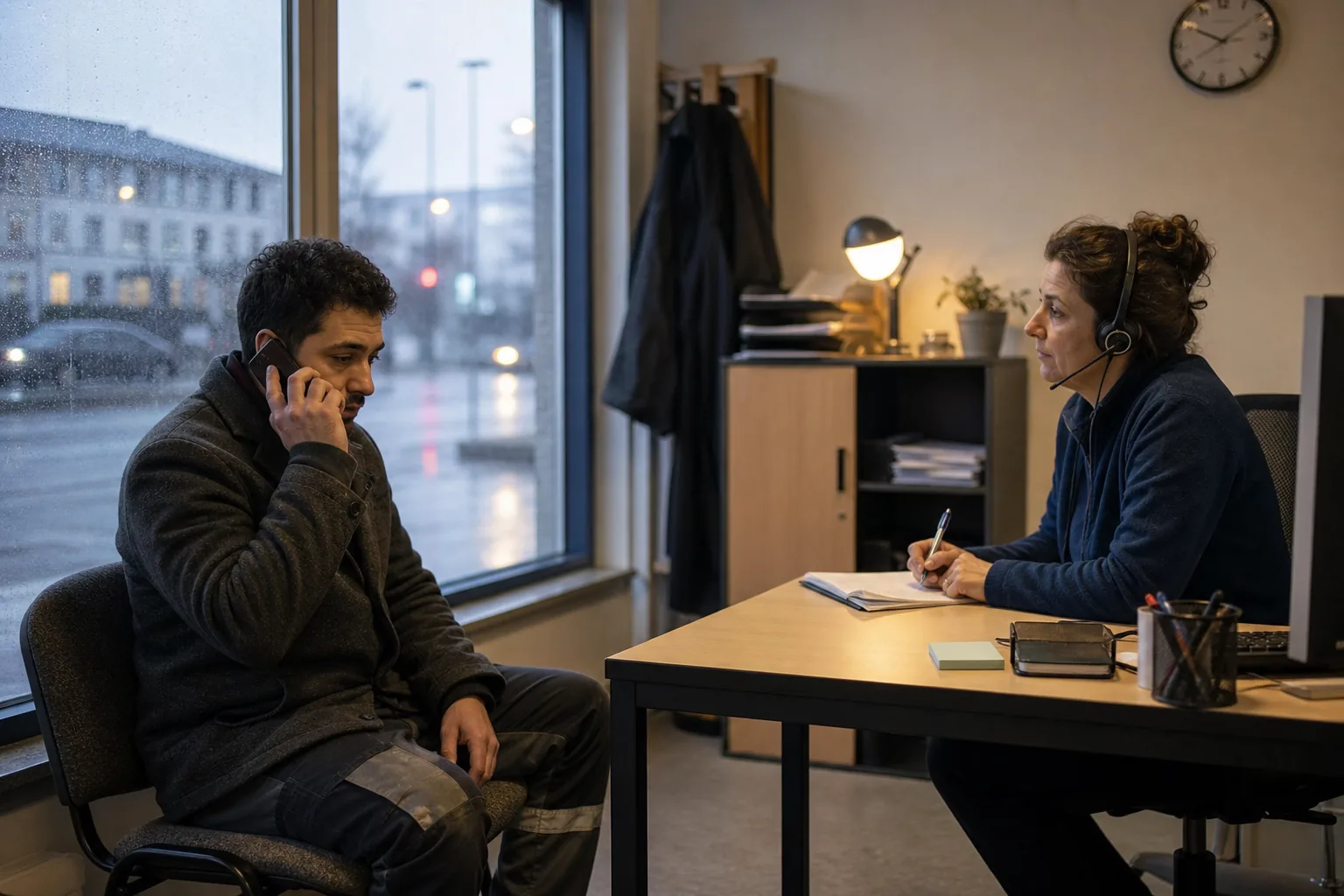
An AI worker hotline can provide a private first route, collect the minimum facts, check whether anyone faces immediate danger and send the report to an authorised person. It should acknowledge receipt without promising confidentiality it cannot guarantee, without deciding whether the report is true and without trying to investigate during the call.
Serious reports need a separate path from ordinary shift and transport questions. The route must still work if the report concerns the usual branch contact, a client supervisor or an accommodation provider. A trained person owns safety action, support, investigation and every employment decision.
Treat the hotline as an access route, not the complaint process itself
A worker may report conduct at a client site, in employer-provided accommodation, during travel or through work messages. ILO Convention No. 190 uses this wider idea of the world of work. For a staffing agency, a form limited to the client workplace can miss the place where the problem occurred.
The phone line should connect the worker to the agency's approved procedure. It is not the investigator, mediator, emergency service or final decision-maker. National law, collective agreements, worker representation and client contracts may set different duties, so the agency must approve the route for every country in which it operates.
Ask about immediate safety before collecting a long statement
Start with a narrow question: is the caller or another person in immediate danger now? If the answer is yes, stop the routine script. Follow the agency's emergency instruction, offer the approved human contact and direct the caller to the appropriate public emergency service where the procedure requires it.
AI should not assess whether the danger is legally serious, tell someone to return to an unsafe place or reassure them that no action is needed. Framework Directive 89/391/EEC places safety, prevention and organisation duties on employers. A phone agent does not take those duties over.
Collect enough for a person to act, then stop
The intake usually needs the caller's preferred contact route, location, when the event happened, who may be at risk, a short account in the caller's own words and any immediate help requested. Ask whether the usual branch contact is involved, because that answer can change the destination of the report.
Do not press for intimate detail, demand evidence or ask the caller to confront the person named. A free-form transcript can expose far more personal data than the response team needs. GDPR purpose limitation and data minimisation support a shorter record with restricted access. Preserve uncertainty instead of filling gaps with an AI interpretation.
Build an independent route around conflicts of interest
A normal worker question may go to the assigned coordinator. A harassment or safety report may need a safeguarding lead, HR, compliance officer, health and safety owner or another role named by the agency. If the usual owner, client or branch is named in the report, routing back to that same queue can expose the caller and undermine the process.
Configure a primary owner, an independent fallback and a response deadline. The AI can apply the approved rule and alert the next person when nobody acknowledges the case. It should not choose an investigator, decide that the report is malicious or downgrade a case because the caller sounds calm.
Be precise about confidentiality and confirmation
Tell the worker who or which function will receive the report, what will be recorded and how follow-up will happen. If the agency cannot offer anonymity, the line should not use that word. Restricted confidentiality is a more accurate promise when authorised people may need the caller's identity to protect them or handle the case lawfully.
The confirmation should include a case reference, the reported time, the next contact route and what to do if the situation becomes urgent. It should not say that the complaint has been accepted as proven. ILO Convention No. 190 and Recommendation No. 206 distinguish safe reporting, privacy and protection from retaliation from the later investigation and remedy process.
Keep the report out of the ordinary operations queue
Limit access to people who own the approved procedure. Do not copy the full account into a branch-wide inbox, a client-facing note or a general dashboard. Operational teams may need a restricted status such as urgent case under specialist review, but they rarely need every allegation and personal detail.
Set a purpose, legal basis, retention rule and deletion process for audio, transcripts, summaries and technical logs. Separate the worker's words from system-generated labels. AI may tag an approved routing trigger, but a person must verify the case before any change to assignments, performance records or access to work.
Test the route in every supported language
Run scenarios in which the named person is the branch manager, the caller changes language, the line drops after an urgent statement or the worker refuses recording. Also test a report from accommodation and a threat sent through a work messaging channel. Each path should reach an authorised person without passing through the implicated owner.
Review the wording with workers or their representatives and with the people who receive cases. EU-OSHA's harassment OiRA material stresses worker involvement, trusted reporting channels and the risks created by power imbalances or weak oversight. The AI Coordinator can make access available around the clock, but the agency remains responsible for the procedure and what happens after the call.
Decisions that must stay with people
AI should not decide whether harassment occurred, assess credibility, recommend discipline, remove a worker from an assignment, contact the person accused or close the report. It should not merge a serious report into attendance or performance data and use it to score the caller.
Employment and worker-management uses can fall into the EU AI Act's high-risk categories. Keeping the hotline focused on intake and authorised routing creates a clearer boundary. Trained people with the right authority handle protection, investigation, evidence, support and any action affecting work.
FAQ
Can an AI hotline receive a workplace harassment report?
Yes. It can collect minimum facts, check immediate safety and route the report securely. A trained person must handle support, investigation and the outcome.
Should the hotline promise anonymity?
Only if the approved process genuinely supports anonymous reporting. Otherwise it should explain restricted confidentiality, who can see the report and how follow-up works.
Can AI decide whether the report is credible?
No. AI should preserve the worker's account and route it. Credibility, evidence, protective measures and employment consequences require accountable human judgment.
Sources and further reading
- ILO: Violence and Harassment Convention, 2019 (No. 190)
- ILO: Violence and Harassment Recommendation, 2019 (No. 206)
- EU-OSHA: Harassment-free workplaces. Let's draw the line with OiRA
- EUR-Lex: Council Directive 89/391/EEC on safety and health at work
- EUR-Lex: General Data Protection Regulation, Article 5
- EUR-Lex: Regulation (EU) 2024/1689, Article 14 and Annex III